
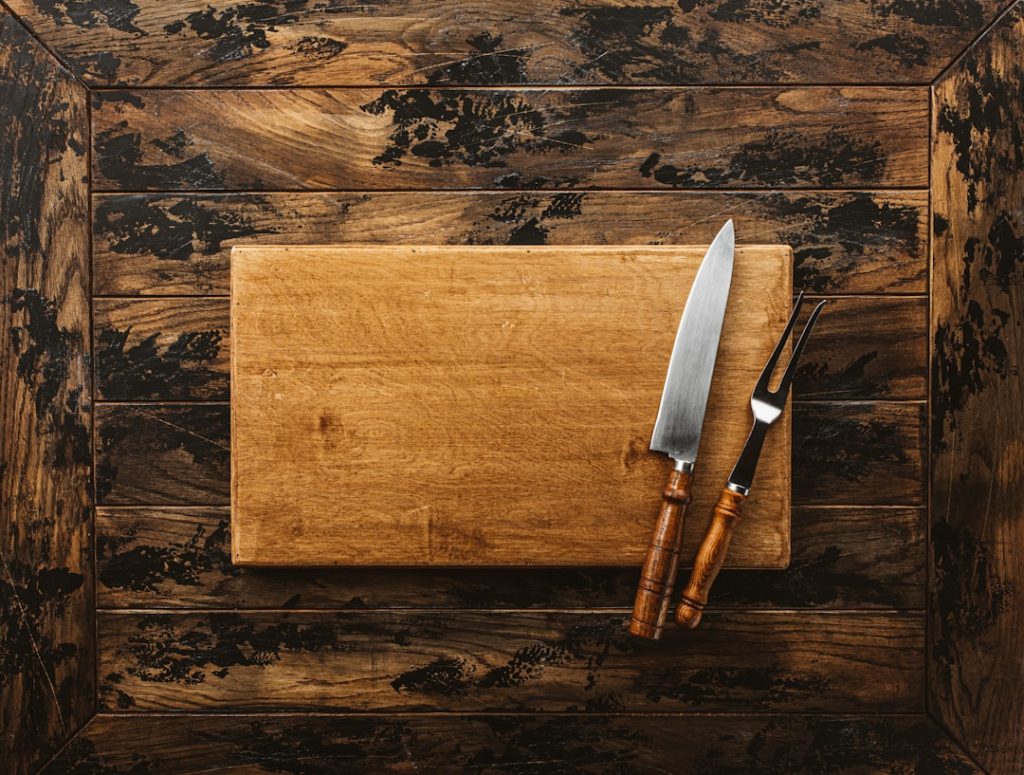
If you just finished cutting raw chicken, steak, or fish on your wooden board, the most important thing to do is wash it immediately with hot, soapy water, scrub both sides thoroughly, rinse it well, and dry it standing upright. That is the single most effective thing you can do. For an extra layer of protection, you can follow that with a food-safe sanitizing step using white vinegar, diluted bleach, or a food-grade hydrogen peroxide spray, then let the board air dry completely before storing it flat or standing it in a rack. You do not need expensive specialty products, and you definitely do not need to put a wood cutting board in the dishwasher. What follows is the full explanation of why each step matters, exactly how to do it, and what to watch out for so your board stays safe and lasts for years.
Why This Question Matters in the Kitchen
Raw meat carries bacteria like Salmonella, E. coli, and Campylobacter that can survive on porous surfaces like wood. A wooden cutting board is not impervious to contamination, which is why how you clean it after raw meat directly affects whether your next meal is safe or risky. The stakes are real. According to USDA food safety guidelines, cross-contamination from raw meat to ready-to-eat foods accounts for a significant share of home kitchen foodborne illness. Your cutting board is the most likely surface where that transfer happens, so knowing how to clean it properly is one of the most practical food safety skills you will ever develop. Beyond safety, proper cleaning also preserves the board itself, prevents odor buildup, and keeps it from becoming a stained, grooved surface that actually harbors more bacteria over time.

The Full Explanation
Wood is a porous material. That means it has tiny open grain structures that can trap bacteria, juices, and debris from raw meat. Unlike plastic, which you can sometimes dishwasher-sanitize, wood requires a more hands-on approach that respects both the material and the food safety reality.
The key principle is mechanical cleaning followed by sanitizing. Soap and hot water physically remove the vast majority of bacteria by lifting them off the surface so the rinse water carries them away. Sanitizing afterward reduces whatever bacteria may have settled into the grain or small knife scars. Think of it as a two-layer defense.
Here is what happens at each stage and why it works.
Hot Soapy Water and Mechanical Scrubbing
Hot water, at least as hot as you can comfortably handle, helps dissolve fats and proteins from raw meat. Soap emulsifies those oils so they do not settle back into the wood grain. Using a stiff brush or a scrubbing pad gives you mechanical action that dislodges particles from the surface and from knife marks. This alone removes a large percentage of surface bacteria.
A 2017 study published on Serious Eats referencing food science research confirmed that thorough washing with soap and hot water is highly effective at reducing bacterial loads on cutting boards so long as you rinse well afterward and dry the board completely, since bacteria need moisture to survive and multiply.
The Rinse and Dry
Rinsing with clean hot water removes soap residue and any remaining debris. Then drying is critical. Bacteria thrive in moist environments, and a wet wooden board left flat on a countertop is essentially an invitation for bacterial growth. Always dry your board standing upright or propped at an angle so air circulates on both sides. Never stack a wet board or lay it flat where moisture can pool.
Optional Sanitizing Step
For raw poultry or ground meat in particular, a sanitizing step adds meaningful protection. You have three reliable options that are food safe and gentle on wood.
| Sanitizing Method | How to Use | Best For |
|---|---|---|
| White vinegar spray | Spray full-strength white vinegar, let sit 3 to 5 minutes, then air dry | Everyday sanitizing of all meats |
| Diluted bleach solution | 1 teaspoon unscented household bleach per 1 quart of water, spray, let sit 1 minute, rinse thoroughly | Raw poultry or heavily contaminated boards |
| Hydrogen peroxide (3 percent) | Spray onto surface, let sit 1 minute, rinse and dry | Sensitive noses and light sanitizing |
Each of these kills surface bacteria effectively without damaging the wood the way harsher chemicals or prolonged soaking would.
Factors That Change the Answer
Not all raw meat presents the same risk, and not all boards are in the same condition. Here are the variables that shift what you should do.
Type of Raw Meat
Raw poultry carries the highest risk for Salmonella and Campylobacter contamination, so a sanitizing step is strongly recommended after cutting chicken or turkey. Beef steaks, where the surface is the primary contact area, present a somewhat lower risk if the board is properly washed, since the interior of a whole muscle is typically sterile. Ground meat is higher risk because the grinding process transfers surface bacteria throughout the product. Fish carries its own bacterial profile. In short, the more porous the meat and the higher the contamination risk, the more important that sanitizing step becomes.
Condition of the Board
A brand-new board with minimal knife scarring is easier to clean thoroughly than an old board with deep grooves and knife marks. Those grooves create tiny pockets where bacteria, moisture, and food particles can hide even after a good scrubbing. If your board has deep cuts that you cannot fully clean no matter how hard you scrub, it is time to retire it. No amount of seasoning or oiling fixes a board that has become a bacterial reservoir. The board does not last forever, and recognizing when to replace it is part of kitchen safety.
Frequency of Use
A board you use daily for raw meat benefits from a consistent cleaning routine and periodic deep conditioning. A board that only comes out occasionally for a single task still needs proper washing each time, but the maintenance schedule can be more relaxed between uses.
Step by Step
- Gather your supplies right after cutting raw meat: hot water, dish soap, a stiff brush or scrub pad, clean towels, and if desired, white vinegar or a diluted bleach solution.
- Wash the board immediately with hot water and a generous amount of dish soap. Do not let raw meat sit on the surface while you clean up other parts of your kitchen.
- Scrub both sides of the board with a stiff brush, paying special attention to knife marks and textured areas where bacteria can hide.
- Rinse the board thoroughly under hot running water, making sure no soap residue or raw meat juices remain on the surface.
- If you are washing after poultry, ground meat, or any situation where you want extra confidence, spray the board with a sanitizing solution of your choice and let it sit for the recommended time.
- Rinse again lightly if you used bleach, then hold the board upright so both sides air dry completely before storing it.
- Once a week or so, apply a thin coat of food-grade mineral oil or a board-specific oil to keep the wood hydrated and less likely to absorb juices in future use. You can find our guide on caring for kitchen tools that goes deeper into conditioning schedules and oil choices.

What Happens If You Get This Wrong
Skipping the wash, using cold or lukewarm water only, letting the board sit with raw meat juices pooled on it, or putting it in a dishwasher are the most common mistakes. Cold water alone does not dissolve fats or remove bacteria effectively. A dishwasher exposes wood to prolonged heat and moisture that causes warping, cracking, and splitting, which ruins the board and can actually create more crevice surface area where bacteria survive. Leaving a board wet flat on a counter allows bacteria to multiply during the hours it takes to dry. Over time, a neglected board develops odors, deep stains, and a texture that makes thorough cleaning nearly impossible. The result at best is a shortened board life, and at worst is a genuine food safety hazard for your household.
For readers who also want to understand how to clean other kitchen tools properly, our article on cleaning food processor blades safely covers a related maintenance routine that keeps your prep equipment in top shape. You might also find our comparison of food processor versus blender for making sauces helpful if you are thinking about which tools to use for different prep tasks.
Frequently Asked Questions
Can you use lemon and salt on a wooden board after raw meat?
Salt and lemon make a decent general-purpose board cleaner because the acid helps lift surface stains and the salt provides light abrasion. However, after raw meat, they are not a substitute for soap and hot water or a proper sanitizing step. The mechanical cleaning from soap and scrubbing is what removes bacteria at a level that acid alone cannot reliably achieve.
How often should you deep-condition your wooden cutting board?
A good target is once a week if you use the board daily, or once every two weeks for lighter use. Applying a thin layer of food-grade mineral oil after each deep cleaning session helps the wood resist absorbing moisture and juices. For a more detailed look at board maintenance routines, you may find our discussion of proper cleaning methods for kitchen equipment useful as a companion resource.
Is it safe to use a wooden board for raw meat at all?
Yes, wooden boards are safe for raw meat when you wash them properly after each use. Many professional kitchens use wooden boards precisely because the wood has natural antimicrobial properties in its grain. The key is that you must clean and dry them thoroughly every single time.
Can you sand down a cutting board to clean it of deep stains from raw meat?
You can sand the surface lightly to refresh a board with surface stains and minor knife marks, which removes a thin layer of the wood where contaminants may have settled deeper. Use fine-grit sandpaper and sand with the grain, then oil the board afterward. If deep grooves remain after sanding, the board is too far gone and should be replaced.
What is the best way to remove odors from a cutting board after garlic or fish?
Rub the board with a cut half of a lemon or sprinkle coarse salt and lemon juice on the surface, then scrub and rinse. For fish odor specifically, a paste of baking soda and water left on the board for a few minutes before rinsing works well. Both methods complement, but do not replace, the hot soapy water washing you need after raw meat.
Take This With You Tomorrow
The single most powerful habit you can build tonight is this: wash your wooden board with hot soapy water and a stiff brush the moment you finish cutting raw meat, dry it standing up, and give it a spray of white vinegar if you want a little extra peace of mind. That is not a complicated ritual, and it will protect both your board and the people eating the food you prepare. A clean cutting board is one of the foundations of a confident kitchen, and this small routine will give you quiet reassurance every time you pick up your knife.