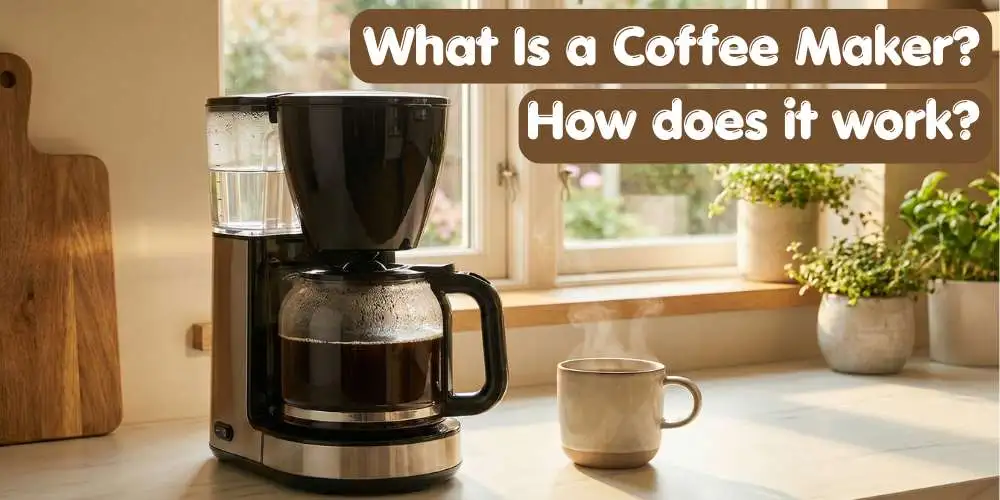

Buying a new machine can feel like a trick when “12 cups” only fills half your favorite travel mug. Simply put, coffee maker capacity is the total liquid volume a machine brews in one full cycle, usually measured in small 5-ounce cups rather than standard American mugs. I learned this the hard way after a week of watery brews and crowded counters in my own kitchen. With years of testing various brewers, I’ve found that matching your machine to your actual daily habits is the only way to avoid waste. Let’s dive into how you can pick the perfect size for your home.
What Is a Coffee Maker and How Does Size Work?
Before we talk about volume, we should ask: what is a coffee maker in terms of your daily workflow? It is a tool designed to heat water and extract flavor from grounds, but its size dictates your entire morning pace. If you choose a small model, you might brew twice. If you go too big, you waste energy. Finding the right coffee maker capacity ensures you have enough for your commute without making a mess.
Understanding Your Coffee Maker Parts
Every machine has specific coffee maker parts that affect how much it can brew at once. The water reservoir holds the raw liquid, while the filter basket determines how many grounds you can use. If you own a popular brand, finding Keurig coffee maker parts or pieces for a drip machine is easy, but the basket size is what truly limits your brew. High-quality parts ensure your machine handles its full capacity without overflowing. Proper maintenance of these parts keeps your brew volume consistent and safe.
Power and Coffee Maker Wattage
A major factor in how fast you get your drink is the coffee maker’s wattage. Larger machines usually need more power to heat up a full tank of water quickly. In many US homes, a high-wattage machine can pull a lot of juice, especially if you have other appliances running at the same time. I always check the power label to make sure my kitchen can handle the load. Choosing the right wattage helps you balance brewing speed with your home’s energy use.

Finding the Best Coffee Maker Parts
When something breaks, you want the best coffee maker parts to get back to your routine. Many people search for coffee maker parts nearby to avoid waiting for shipping, especially for gaskets or carafes. Whether you are fixing a leak or replacing a cracked pot, using the right pieces saves money. Keeping a few spare parts on hand is a great way to extend the life of your machine.
Introduction: What Coffee Maker Capacity Really Means
Most people buy a coffee maker thinking “cups” mean mugs and they regret it within the first week. This section clears that confusion from the start.
When I first started building my home coffee setup, I made the classic rookie mistake. I saw a shiny “12-cup” machine on the shelf and thought, “Perfect! That’s enough for a huge brunch or my massive morning mug.” I was wrong. I realized very quickly that in the world of coffee, a “cup” is not the 12-ounce mug I hold in my hand while staring blankly at my laptop.
What Capacity Actually Is
In simple words, coffee maker size refers to the total volume of liquid the machine can brew in one single cycle. It isn’t about how many people it serves; it’s about the total brew amount available.
Understanding this is vital for your daily coffee use. If you pick a machine that is too small, you’ll find yourself standing in the kitchen brewing three separate times just to get through a busy morning rush. If you go too big, you end up wasting expensive beans and heating up a massive tank for just one person.
Who I Wrote This For
I put this beginner coffee guide together for anyone who has ever felt cheated by the numbers on the box. Specifically, this is for:
- Home Users: People like me who just want a reliable caffeine fix without the math.
- Beginners: If you’re moving out for the first time or upgrading from instant coffee.
- Small Offices: Where the “morning rush” at the shared kitchen feels like a high-stakes competition.
Whether you are trying to survive a frantic Monday morning or keeping the peace in a shared break room, getting the capacity right changes everything.
At a Glance: Capacity vs. Reality
| If the Box Says… | It Really Means… | Best For… |
| 1–2 Cups | 1 Medium Mug | Solo drinkers & Dorms |
| 4–5 Cups | 2 Standard Mugs | Couples & Small apartments |
| 8–10 Cups | 4 Standard Mugs | Families & Daily home use |
| 12+ Cups | 5–6 Standard Mugs | Offices & Hosting guests |
What Is Coffee Maker Capacity? (Simple Definition)
Before we dive into numbers and charts, let’s get the definition straight. We don’t need technical talk to understand how much coffee we’re actually getting.
Simple Definition of Coffee Maker Capacity
In the simplest terms, capacity is just the total amount of coffee a machine can brew in one single go. When I bought my first machine, I felt so confident reading the box. I saw “4 Cups” and pictured four of my favorite ceramic mugs lined up on the counter, ready for a long Saturday morning of reading.
The reality hit me about ten minutes later. I filled the carafe to the “4” line, brewed the pot, and poured it out. To my shock, it barely filled one and a half of my actual mugs. I stood there in my pajamas, staring at a half-empty cup, feeling like I’d been tricked by a magic act.
To keep your expectations realistic, remember that capacity is usually measured in three ways:
- Cups: These are “manufacturer cups,” which are much smaller than your average mug.
- Liters: This is the most accurate way to see the total liquid volume.
- Ounces: Useful if you know exactly how many ounces your travel thermos holds.
The biggest takeaway from my own kitchen fail? A coffee “cup” is almost never a regular mug. Most brands treat a cup like a small tea serving, not the big, steaming dose of caffeine we usually crave to start the day. If you don’t keep this in mind, you’ll end up like I did frustrated and immediately brewing a second pot.

How Coffee Maker Capacity Is Measured
This is where most confusion starts. It is also where brands quietly lose many beginners.
What Does “1 Cup” Actually Mean?
When I first unboxed my drip machine, I saw the water lines marked 1 through 12. I felt ready for a party. But then I looked at the manual. A “cup” for a coffee brand is usually only 5 to 6 ounces (150–180 ml).
To give you some context, my favorite morning mug holds about 12 ounces. If I use a “4-cup” machine, I am really only making two real mugs of coffee. It was a total shock to my morning routine!
Manufacturer Cup vs Regular Coffee Mug
Why do brands use these tiny sizes? It makes the brew volume sound much more impressive on the box. “12 Cups” sounds like a feast. “60 Ounces” sounds like a science project.
Most normal mugs hold 250 to 350 ml. Because of this, the coffee cup size listed on the box is almost half of what you use at home. Manufacturers stick to this old standard because it makes their machines look high-capacity without taking up more counter space.
Why Capacity Numbers Feel Misleading
The first time I brewed a full “10-cup” pot, I expected to serve my whole family. Instead, we ran out before the toast was even done. This visual mismatch is a huge source of frustration for new users.
It feels like a prank. You see a big number, but you get a small result. I used to laugh at how my “Large” carafe looked so tiny next to my travel thermos. To help you avoid this, here is a quick look at the real coffee measurement math:
| If the box says… | Think of it as… | Reality Check |
| 4 Cups | 2 Real Mugs | Great for a quiet desk morning. |
| 8 Cups | 4 Real Mugs | Good for a quick breakfast for two. |
| 12 Cups | 6 Real Mugs | The “standard” family size. |

Common Coffee Maker Capacity Sizes Explained
Not everyone needs a giant machine. On the flip side, buying one that is too small can make your mornings feel like a chore.
Single-Serve Coffee Makers (1–2 Cups)
I used a single-serve machine back when I lived in a tiny studio apartment. It sat right on my desk next to my laptop. These are perfect for solo drinkers who just want one quick brew before heading out.
I loved that I didn’t waste any beans, but it was a bit of a pain when a friend came over. I had to brew twice just to have a chat! Still, if you are in a dorm or have a very small kitchen, this is the best way to save space.
Small Capacity Coffee Makers (4–5 Cups)
When I moved in with my partner, we upgraded to a small home coffee maker. We thought four cups would be plenty. Since a “cup” is actually small, this size gave us exactly two full mugs each.
It is a great choice for couples or light daily use. It fits neatly under most cabinets without taking over the whole counter. It felt like a solid middle ground until we started hosting Sunday brunch.
Medium Capacity Coffee Makers (8–10 Cups)
This is what I currently use in my shared home kitchen. It is the most balanced option I have found. An 8-cup drip coffee maker gives us enough for a long morning of work plus a little extra for a thermos.
It handles a small family well. You won’t find yourself refilling the tank every five minutes, but you also aren’t brewing a massive pot that just sits there and gets bitter.
Large Capacity Coffee Makers (12–14 Cups)
I only pull out the “big guns” for office parties or when the whole family stays for the holidays. These machines are great for large groups, but they are bulky.
Before you buy one, check your counter space! These often have a higher power draw, too. If I used this every day for just myself, I’d feel guilty about the electricity and the wasted water. They are wonderful for guests, but a bit much for a quiet Tuesday morning.
Coffee Maker Capacity vs Number of Users
Capacity makes the most sense when you think in terms of people, not just numbers on a carafe.
Best Capacity for One Person
When it was just me in my first apartment, I thought a tiny machine was enough. Imagine a cold Tuesday morning. You just want one large, warm mug to wake up. For a solo drinker, a 1-cup to 4-cup machine is perfect. It fits the daily habit of brewing exactly what you need. You get your fresh fix, and there is zero waste. I loved not having to pour half a pot down the sink every day.
Best Capacity for 2–3 People
Things got tricky when I started sharing a kitchen. With two or three people, you have shared routines. If you use a small 4-cup pot, you hit a “back-to-back” brewing issue. One person gets their coffee, and the next has to wait ten minutes for a fresh cycle. It ruins the flow of the morning. For a small group, I highly suggest an 8-cup model. It ensures everyone gets their first mug at the same time without the wait.
Best Capacity for Families or Offices
In a busy house or during an office tea break, convenience is king. You need a 12-cup or 14-cup machine here. I remember hosting my family last Christmas. Having a large pot meant I wasn’t stuck in the kitchen all morning.
The goal here is to balance convenience with waste. A large pot keeps coffee warm for everyone, but you have to drink it fast so it stays fresh. In an office, a large machine prevents the “empty pot” frustration that happens when five people want a drink at once.
Coffee Maker Capacity vs Coffee Strength
More coffee does not mean stronger coffee. This common myth leads to a lot of watery, disappointing mornings.
Why Capacity Does Not Control Strength
When I first upgraded to a larger machine, I assumed a bigger pot meant a bigger kick. I was wrong. I learned the hard way that capacity is strictly about volume. It is just a measure of how much liquid the carafe can hold.
Think of it like a swimming pool versus a bathtub. Both can be filled with water, but the size of the container doesn’t tell you how salty the water is. My first “large” brew tasted like tinted water because I didn’t adjust my ingredients.
What Actually Affects Coffee Strength
If you want a bolder taste, don’t look at the size of the machine. Focus on these three things instead:
- Coffee-to-Water Ratio: This is the golden rule. If you use more water, you must use more grounds.
- Grind Size: Fine grinds usually taste stronger than coarse ones.
- Brew Settings: Many modern machines have a “Bold” button that slows down the water flow.
Why Large Machines Can Still Brew Weak Coffee
I used to make a huge mistake with my 12-cup brewer. On quiet Monday mornings, I would only fill it halfway but use the same amount of coffee I used for my small machine. It tasted terrible.
Large machines often struggle to brew small amounts. If the water runs through the grounds too fast, you get a weak, sour mess. I also found that many beginners forget to scale up their scoops. If you fill a giant tank but keep your “two-scoop” habit, you aren’t making more coffee you’re just making more brown water. Trust my experience: stay precise with your ratios, no matter how big the pot is!
Water Tank Capacity vs Brew Capacity
Two numbers on the same machine, but they don’t always mean the same thing. This can be a huge shock if you aren’t expecting it.
What Is Water Tank Capacity?
Think of the water tank as the gas tank in your car. It is the total amount of water the machine can hold at one time. When I first got a machine with a huge, clear reservoir, I thought, “Great! I can fill this once and forget it.” The tank is built for storage. It is the raw resource the machine pulls from. I loved seeing the clear water level, but I soon realized that just because the tank is full, it doesn’t mean I should use it all in one go.
What Is Brew Capacity?
This is the limit of the actual cycle. It is the maximum amount of coffee the machine can safely brew in one shot. I remember a hectic Monday morning when I filled the tank to the brim and hit “Start,” expecting a massive pot.
The machine actually stopped halfway through. It turned out the carafe was smaller than the tank! Brew capacity is about what the machine can handle in terms of heat and basket space. If you try to force more, you end up with a mess or a very weak drink.
Why These Numbers Are Often Different
It feels strange at first, but there are good reasons for this gap. Brands design machines with larger tanks for convenience. They don’t want you to refill the water every single time you want a cup.
The differences usually come down to:
- Design Limits: The filter basket can only hold so many grounds.
- Safety: The heating element needs a break after a certain amount of work.
- Physics: Pushing too much water through the grounds too fast ruins the taste.
Don’t feel like the brand is lying to you. It took me a few tries to find the “sweet spot” on my machine. Just treat the tank as a storage bin and the carafe as your actual limit. It makes the whole process a lot calmer and prevents those early-morning spills!
Common Coffee Maker Capacity Mistakes People Make
Most capacity mistakes come from guessing instead of planning. I learned this the hard way through a few messy mornings and some wasted beans.
The “Cup vs. Mug” Trap
The biggest mistake I ever made was assuming a 12-cup machine would fill 12 of my large ceramic mugs. I stood in my kitchen on a busy Monday, watching the carafe fill up, only to realize it barely served five of us. It was so embarrassing to tell my guests I had to start a second pot! Confusing manufacturer cups with real-life mugs is a classic rookie error that leaves you caffeinated but frustrated.
Buying Too Big “Just in Case”
I once bought a massive machine because I thought, “What if I host a giant party?” That party happened once a year. The rest of the time, I was cleaning a huge pot for just one person. This “just in case” logic leads to a few annoying consequences:
- Wasted Coffee: I constantly brewed too much and had to pour cold, bitter liquid down the drain.
- Higher Electricity Use: Larger machines often use more power to heat up that big tank of water.
- Storage Frustration: My giant brewer barely fit under my cabinets. I had to slide it across the counter every single morning just to open the lid.
Overestimating Your Daily Needs
We often think we drink more than we do. I used to brew a full pot, but I noticed I’d get distracted by work and forget the second half. By the time I went back for more, the coffee was burnt from sitting on the heater. It felt like such a waste of money.
Now, I plan based on my actual daily coffee use, not a fantasy version of myself. If you don’t plan your space and your habits, you’ll end up with a bulky machine that feels more like a burden than a treat. Trust me, it’s much better to buy for your Tuesday morning than your once-a-year holiday dinner.
How to Choose the Right Coffee Maker Capacity
Choosing the right capacity becomes easy when you ask the right questions. I stopped guessing after I ended up with a machine that took up half my counter and made way too much coffee.
Through my own trial and error, I found that picking a size is about your real life, not just the number on the box. Here is the simple checklist I use now to make sure my morning brew is perfect:
- How many people drink coffee daily? Be honest here. If it is just you and a partner, a small or medium pot is plenty. You don’t need a massive office-sized machine for a quiet Tuesday at home.
- How often do you brew? Do you drink one giant mug and leave? Or do you come back for a refill every hour? I realized I prefer fresh coffee, so I chose a machine that lets me brew smaller, frequent batches.
- What is your preferred mug size? Grab your favorite mug and measure it. If it holds 12 ounces, remember that a “4-cup” machine only makes about 20 to 24 ounces total.
- How much kitchen space do you have? I once bought a large brewer that hit the bottom of my cabinets. It was a nightmare to fill! Measure your height and width before you buy.
- Consider the power usage. Keep in mind that a larger capacity often means higher wattage. If you live in an old apartment like I did, a giant machine might even trip your breaker during the morning rush.
When I finally followed this list, I felt so much calmer. No more wasted beans, no more cramped counters, and no more cold coffee. I suggest taking five minutes on a Saturday morning to walk through these steps. It will save you a lot of stress and a lot of money in the long run.

Frequently Asked Questions About Coffee Maker Capacity
These are the questions beginners usually ask after buying. It is much better to have these answers now so you don’t end up with “buyer’s remorse” like I did.
How many cups are enough for home use?
For a standard home, an 8 to 12-cup machine is usually the “sweet spot.” When I live on my own, a 4-cup brewer is fine. But the moment I have a guest over for a Saturday morning chat, I regret having such a small pot. If you drink two large mugs a day, an 8-cup machine is your best friend.
Is a larger capacity coffee maker better?
Not always! I used to think bigger was better until I realized a large machine takes longer to heat up. It also takes up way more space on my counter. If you only brew for one or two people, a giant 14-cup machine is just a bulky paperweight that makes your kitchen feel cramped.
Does capacity affect electricity usage?
Yes, it does. In my experience, larger machines use more power to heat that big tank of water. If you are brewing a full 12-cup pot every morning, you will notice a small bump in your bill compared to using a single-serve pod. Plus, keeping a large hot plate running for hours is a total energy drain.
Can I brew less coffee in a large machine?
You can, but be careful. When I try to brew just two “cups” in my 12-cup carafe, the water often flows through the grounds too fast. This makes the coffee taste weak and sour. Some high-end machines have a “1–4 cup” setting to fix this, but a cheap large machine usually struggles with small batches.
What coffee maker capacity is best for beginners?
I always tell my friends to start with a 10-cup machine. It is the most flexible size. It handles your quiet Monday morning just as well as a small Sunday brunch. It’s the safest bet for a beginner who isn’t sure exactly how much they will brew each day.
Final Thoughts: Understanding Coffee Maker Capacity
Once you understand capacity, choosing a coffee maker becomes far less stressful. Looking back at my first few weeks of brewing, I realize how much mental energy I wasted just trying to get a full mug of coffee.
I used to stand in my kitchen, bleary-eyed on a Tuesday morning, feeling genuinely confused why my “large” machine only gave me a tiny bit of coffee. It felt like a math test I hadn’t studied for. But once I learned the secret of the manufacturer “cup,” the mystery vanished. I stopped feeling like I was being tricked and started feeling like a pro.
Key Takeaways for Your Kitchen
To make sure you don’t repeat my early-morning meltdowns, keep these points in mind:
- Capacity means brew size, not mug count: Always remember that a “cup” on the box is only about 5 ounces.
- Bigger isn’t always better: A giant machine on a small counter is just a bulky obstacle.
- Choose based on daily use, not occasional guests: Buy for your real, everyday life. You can always brew a second pot when friends visit.
Finding the right balance changed my entire morning routine. I no longer have half a pot of wasted, cold coffee sitting on the heater at noon. I also don’t have to brew three separate times just to fill my travel mug before a long commute. When you match your machine to your actual habits, your coffee just tastes better.
I hope this guide helps you skip the frustration and go straight to the perfect brew. Trust me, your future, caffeinated self will thank you for doing the research today!