Finding the best coffee maker for office use is the secret to a happy and fast-paced workplace. You need a machine that is fast, tough, and easy to clean so your team stays focused on their big goals. I learned this after my old home coffee machine failed us during a busy Monday morning rush. With years of testing different types of coffee makers, I can help you pick a system that fits your specific team size. Read my full guide to find the perfect brewer that will keep your office energy high all day long.
Why Offices Need a Dedicated Coffee Maker
I’ve learned the hard way that a good office coffee maker isn’t just a kitchen appliance; it’s the heartbeat of the workplace. In my early days at a small tech startup, we treated our coffee machine like an afterthought. We quickly realized that when the caffeine stops flowing, productivity doesn’t just slow down; it grinds to a halt.
A dedicated machine keeps the day moving. It handles the 9:00 AM Monday rush and the 3:00 PM Wednesday slump without breaking a sweat. It’s about more than just a drink; it’s about keeping your team comfortable, focused, and most importantly, present.

Common Coffee Problems in Offices
Before we upgraded, our “coffee corner” was a source of daily stress. If you’ve ever worked in a busy office, you’ve probably lived through these headaches:
- The Morning Bottleneck: Too many people are trying to use one small machine at the same time.
- The Waiting Game: Slow brewing speeds that turn a quick break into a ten-minute line.
- The “Empty Tank” Syndrome: Constant water refilling because the reservoir is too small for a team.
- The Meltdown: Home-grade machines breaking down after just a few months of heavy use.
- The Mystery Brew: One batch tastes like liquid gold, and the next tastes like burnt battery acid.
A Tuesday Morning Tale: Imagine it’s a rainy Tuesday. The team is soaked, tired, and lining up for a boost. We had this tiny home coffee machine that could only make two cups at a time. By the time the fourth person got their mug, the first person was already done and the machine needed a full refill and a deep clean. It was a productivity nightmare.
Who This Guide Is For
I wrote this guide for anyone who is tired of bad office coffee and wants a solution that actually works. Specifically, this is for:
| Office Type | Team Size | Typical Needs |
| Small Offices | 1–5 People | Speed and variety |
| Growing Teams | 5–15 People | Large capacity and durability |
| Startups | Varies | Cost-effective and easy to clean |
| Coworking Spaces | High Traffic | Commercial-grade reliability |
What You Will Learn in This Guide
I want to help you skip the trial-and-error phase I went through. By the end of this article, you’ll have a clear grasp on:
- The Best Types: Which machines (Drip, Single-Serve, or Espresso) actually fit your specific vibe.
- Workflow Features: The “must-haves” like fast brewing speed and large water capacity that keep the line moving.
- Smart Buying: How to pick a machine based on your headcount so you don’t overspend or underperform.
A great cup of coffee can turn a stressful morning into a win. Let’s find the right machine to make that happen for your team.
What Is a Coffee Maker for Office Use?
I used to think a coffee maker was just a coffee maker. I even brought my favorite home coffee machine from my kitchen to the office once. I thought I was being a hero. Instead, I watched that poor machine struggle, sputter, and eventually give up on life by noon on a busy Thursday.
That was my wake-up call. A true office coffee maker is built differently. It isn’t just a gadget; it is a workhorse. These machines are designed for high speed and heavy-duty use. They handle back-to-back brewing without needing a “break” or slowing down your team’s workflow.
Difference Between Home vs. Office Coffee Machines
The main difference comes down to stamina. My home machine was great for a quiet Saturday morning cup. But at the office? It felt like bringing a bicycle to a drag race. Here is what I noticed when we finally upgraded:
- Usage Levels: Home units are for a few cups a day. Office models are for continuous, all-day brewing.
- Tank Size: Office machines have huge water reservoirs. You won’t have to walk to the sink every ten minutes.
- Heating Power: They use stronger parts to heat water in seconds, not minutes.

Why Office Coffee Makers Need Stronger Performance
In a professional setting, time is money, and patience is thin. I’ve seen how a slow machine can turn a friendly breakroom into a place of quiet frustration. To keep the peace, an office machine needs:
- Huge Capacity: It should fill a large carafe or many mugs in one go.
- Rapid Cycles: You want the coffee in the cup before the next meeting starts.
- Tough Parts: The internal pumps and seals must be metal or high-grade plastic to survive hundreds of uses a week.
How Does It Work?
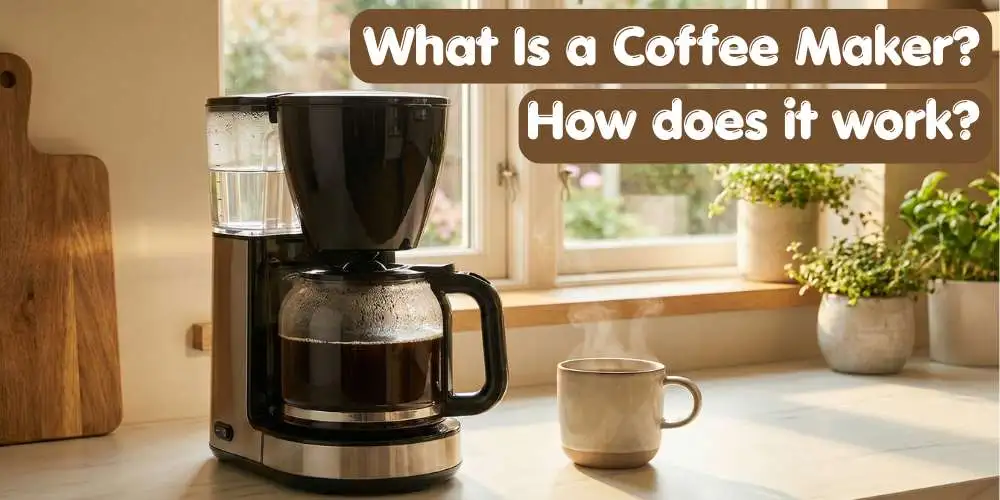
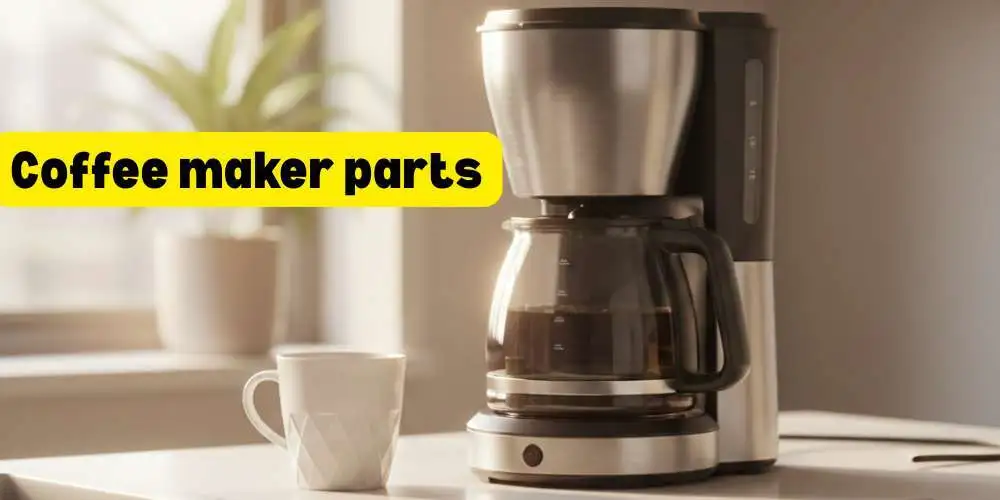
If you’ve ever wondered how does it work under the hood, it’s a simple but precise process. First, a heavy-duty heating element warms water to the perfect temperature. Then, a strong pump pushes water through coffee grounds with enough force to get all the flavor out quickly. Finally, a high-quality filter separates grounds from brewed coffee, leaving you with a clean, hot cup every single time.
Seeing the difference in person was eye-opening. Once we got a machine that could actually keep up, the vibe in the kitchen changed from “annoyed waiting” to “happy sipping.”
Types of Coffee Makers for Office Use
When I first started shopping for our workspace, I realized that “one size fits all” is a myth in the coffee world. Every team has its own unique rhythm. Some people want a quick fuel injection between calls, while others want a giant pot to share during a long brainstorm. Matching the machine to your team’s personality is key to keeping everyone happy.
Drip Coffee Makers (Best for Medium & Large Teams)
For our mid-sized group, drip coffee makers were a total lifesaver. There is something comforting about the smell of a fresh pot brewing that fills the whole hall. They are cost-effective and very easy to keep clean, which is a big win for any busy office.
If you want to level up, I highly recommend looking at drip coffee makers with grinder units built right in. In my experience, using freshly cracked beans makes a world of difference. It takes the taste from “standard office sludge” to “actually delicious.”
- Pros: Brews 10–12 cups at once; low maintenance.
- Top Brands: We’ve had great luck with brands like Cuisinart for reliability.
Single-Serve Coffee Makers (Best for Small Offices)
When I worked in a tiny three-person suite, a full carafe was overkill. We wasted so much coffee! Switching to a single-serve machine changed everything. Each person could pick their own flavor, and there was zero cleanup.
It’s the fastest way to get an individual cup. Plus, brands like Keurig make it so simple that even the most “non-tech” person on your team can use it without a manual.
- Pros: No waste; very fast; huge variety of flavors.
- Best for: Offices with 1–5 people or picky drinkers.
Espresso Machines (Best for Premium Office Setups)
Now, some offices take their caffeine very seriously. I once visited a high-end firm where the espresso machine was the star of the lobby. It felt like a morning ritual before anyone even dared to open an email.
If you have a team of coffee snobs (and I say that with love!), a brand like Breville can provide that rich, café-style quality. It’s a great perk for executive suites or creative studios where a latte is part of the culture.
Commercial Coffee Systems (Best for High-Traffic Offices)
If you are in a massive building or a busy coworking space, you need commercial coffee systems. These aren’t just machines; they are industrial powerhouses. I’ve seen these in action at tech hubs where the coffee never stops flowing. They have massive reservoirs and can brew cup after cup for hours on end without a drop in quality.
| Machine Type | Best For | Speed |
| Drip | Large groups | Medium |
| Single-Serve | Variety seekers | Fast |
| Espresso | Premium taste | Slow/Artisan |
| Commercial | 20+ people | Continuous |
Office Coffee Maker Capacity Guide
I used to think buying the biggest machine possible was the smart move. I was wrong. I once put a massive industrial brewer in a three-person office, and the coffee sat there getting stale and bitter. On the flip side, I’ve seen teams of fifteen fighting over a single-serve pod machine. Getting the capacity right is the secret to a happy breakroom.
Choosing the right size prevents constant refilling. It also saves precious time during those frantic morning hours. You want a machine that keeps up with the flow without taking up too much desk space.
Recommended Capacity by Office Size
To help you avoid my past mistakes, I’ve put together a simple cheat sheet. This is based on what I’ve seen work in real-world settings.
| Office Size | Recommended Capacity | Why This Size? |
| 1–5 employees | 4–8 cups | Keeps coffee fresh; low waste. |
| 5–15 employees | 8–12 cups | Handles the mid-morning rush well. |
| 15+ employees | 12–14+ cups | Minimizes constant trips to the sink. |
The 10:30 AM Reality Check
In many small offices, I’ve noticed a funny pattern. No matter how big the first pot is, the first refill usually happens right around 10:30 AM. This is that “second cup” window when the whole team hits their stride.
If your machine is too small, someone ends up standing there, tapping their foot while the water heats up again. It feels like a small thing, but those minutes add up. By matching your capacity to your headcount, you ensure the coffee is always ready when the next big idea strikes.
Key Features to Look for in an Office Coffee Maker
When I first started looking for a machine for our team, I got distracted by fancy touchscreens and glowing lights. I quickly learned that those don’t matter when it’s 8:00 AM on a frantic Monday and the line is five people deep. You need features that actually solve workplace problems, not just look cool on the counter.
The right features make daily use a breeze and keep your maintenance chores from turning into a second job. Here is what I’ve found to be truly essential after years of trial and error.
Must-Have Features for Workplace Use
Through a lot of spilled beans and late meetings, I’ve narrowed down the “non-negotiables.” If a machine doesn’t have these, I usually walk away:
- Large Water Capacity: This is my number one rule. You want a massive water capacity so you aren’t hiking to the sink every twenty minutes.
- Fast Brewing Speed: In an office, a brewing speed of under 10 minutes is a must. Anything slower causes a traffic jam in the kitchen.
- Thermal Carafe: I highly suggest a thermal carafe over a glass pot. It keeps the coffee hot for hours without that “burnt” taste that happens on a hot plate.
- Auto Shut-Off: We’ve all been halfway home and wondered, “Did I leave the pot on?” This safety feature is a total stress-saver.
- Stainless-Steel Build: Plastic parts tend to crack under heavy use. A durable metal body lasts much longer.
- Programmable Timer: I love walking in at 8:30 AM to the smell of fresh coffee that started itself at 8:15 AM.
Ease of Cleaning
One thing I didn’t think about early on was the cleanup. If a machine has too many tiny, hidden parts, it will get gross fast because nobody will want to clean it. I now look for machines with removable parts that are dishwasher safe.
Pro Tip: Look for a “clean me” light. It’s a small detail, but it prevents the machine from breaking down due to scale buildup. It’s much easier to fix a small issue on a Friday afternoon than to deal with a broken machine on a busy Tuesday morning.
| Feature | Why You Need It | Personal Rating |
| High Wattage | Faster brew times | 5/5 |
| Removable Tank | Easier to fill and clean | 4/5 |
| Pre-infusion | Better flavor extraction | 3/5 |
Benefits of Having a Coffee Maker in the Office
I used to think that providing free coffee was just a small perk, like having nice pens or good chairs. But after managing a few different teams, I realized that a reliable coffee setup is a major game-changer. It is one of those rare things that makes everyone’s day a little better while actually helping the business grow.
When we finally got a high-quality machine, the atmosphere changed. It wasn’t just about the caffeine. It was about creating a space where people felt cared for.
Productivity and Cost Benefits
Before we had a dedicated brewer, I noticed a lot of “ghost desks” around 10:00 AM. People would leave the building to find a latte, often disappearing for twenty minutes at a time. Once we brought the coffee in-house, everything shifted:
- Less Time Away: Having a machine on-site reduces those long treks to the local cafe.
- Big Savings: At $5 a cup, a daily habit adds up. My team was thrilled to save over $100 a month on their personal coffee expenses.
- Sharper Focus: When that afternoon slump hits, a fresh cup is just steps away, keeping everyone on task.
Workplace Comfort & Team Culture
This is the part that surprised me most. I’ve seen some of our best ideas start near the coffee machine, not in the formal meeting room. There is something about the “water cooler effect” or in this case, the coffee carafe effect, that breaks down walls between departments.
- Mental Resets: It encourages short, healthy social breaks that prevent burnout.
- Boosted Morale: It’s a simple way to show the team that their comfort matters.
- Casual Collisions: I’ve watched a designer and a coder solve a bug just because they happened to be filling their mugs at the same time.
It sounds like a small detail, but a warm cup of coffee makes a cold office feel like a community. It turns a sterile workspace into a place where people actually want to be.
How to Choose the Best Coffee Maker for Your Office
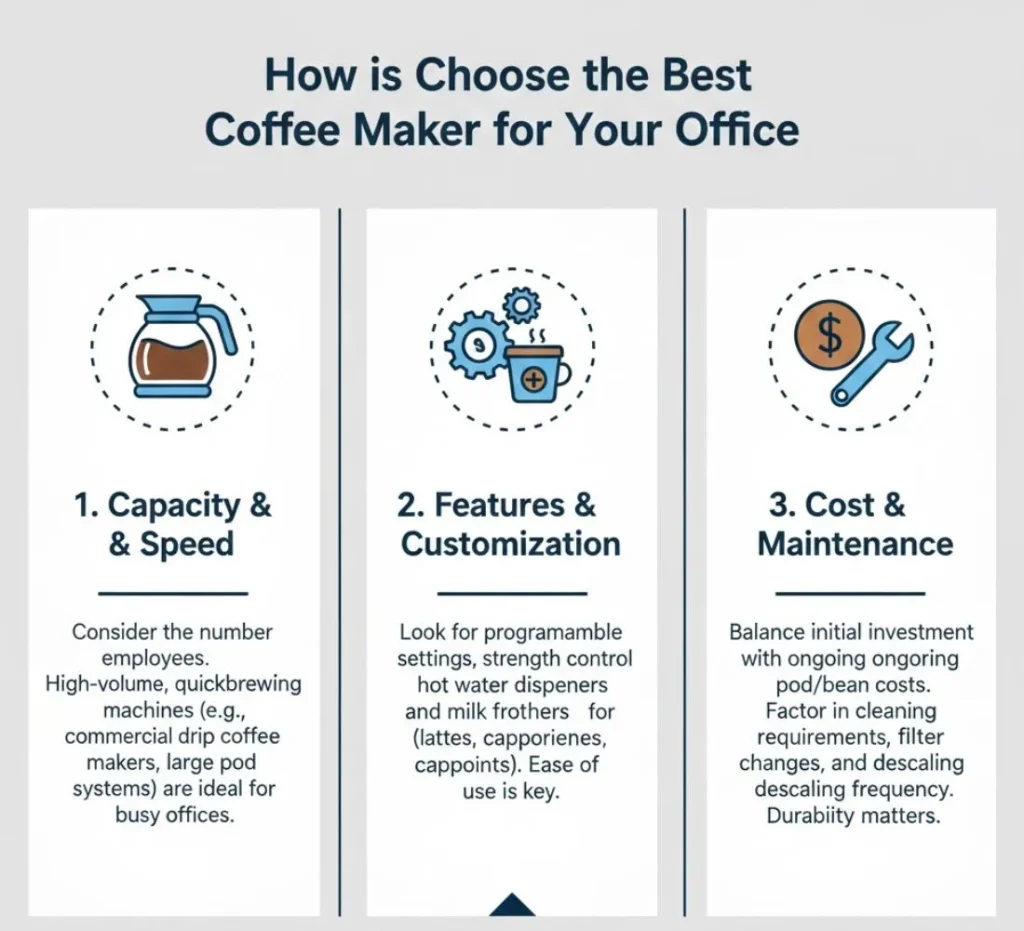
I’ve learned that picking the wrong brewer is a fast track to regret. Early in my career, I bought a flashy machine that looked like it belonged in a spaceship. Within a month, it was leaking on the counter, and my team was grumpy. A few simple checks can save you from that headache and keep your kitchen running like a well-oiled machine.
Consider Office Size
This is the most logical starting point. You need to match your machine’s capacity with your actual employee count. If you have ten people, don’t buy a tiny four-cup pot. I’ve seen how quickly a small reservoir leads to “sink fatigue.” On a busy Monday morning, the last thing you want is a queue of people waiting for a refill.
Set a Practical Budget
Be honest about your spending. I’ve found that basic office machines are great for small startups on a budget. However, if you have a high-traffic space, a commercial-grade machine is a better long-term investment. It might cost more upfront, but it won’t break down after three months of heavy use. Think of it as paying for peace of mind.
Check Maintenance Requirements
I used to ignore the manual, but now I check the cleaning steps before I buy. You need to know:
- Descaling frequency: How often will you need to clear out mineral gunk?
- Filter replacement: Are the filters cheap and easy to find?
- Cleaning effort: Does it take five minutes or an hour to scrub?
If it’s too hard to clean, nobody will do it. Trust me on that one.
Estimate Coffee Consumption Level
Finally, look at your team’s habits. Are they light drinkers who just want one cup at 9:00 AM? Or are they heavy coffee “pro-users” who need a fresh pot every hour? In my last office, we had three people who drank five cups each. We needed a beast of a machine.
Knowing your team’s rhythm helps you choose a machine that fits their life, not just your counter space.
Maintenance Tips for Office Coffee Makers
I learned the hard way that a neglected coffee maker is a recipe for a bad morning. I once ignored our brewer’s “clean me” light for a month. By the time I noticed, the coffee tasted like a dusty attic, and the machine was making a scary groaning sound. Now, I treat maintenance like a quick ritual. It keeps the coffee fresh and saves us from buying a new machine every year.
Regular upkeep is the secret to a long-lasting brewer. If you take care of the machine, it will take care of your team. Plus, nobody likes the smell of old, burnt grounds lingering in the breakroom on a Monday morning.
Simple Weekly Maintenance Routine
I usually tackle this on Friday afternoons. It only takes five minutes, but it makes a huge difference for the following week. Here is my quick routine:
- Clean Removable Parts: I take out the drip tray and pod holder. I give them a quick rinse with warm, soapy water to remove sticky spills.
- Wash the Carafe and Filter Basket: Don’t just rinse them. Use a soft sponge to get rid of oily residue. If you leave those oils behind, your next batch will taste bitter and flat.
Monthly Maintenance Checklist
Once a month, I do a “deep dive.” This is what prevents those expensive breakdowns. If your office has hard water, this step is even more vital.
- Descale to Remove Mineral Buildup: Minerals from water can clog the internal pipes. I run a mix of water and vinegar (or a descaling solution) through a full cycle. It’s like a detox for the machine.
- Use Filtered Water: I started filling the reservoir with filtered water from the cooler. The taste improved instantly. It also means I have to descale much less often.
- Check the Seals: I do a quick eye-check of the rubber gaskets. If they look cracked, I swap them out before they start leaking all over the counter.
A little bit of love goes a long way. Since I started this routine, our machine has been running smoothly without a single “out of order” sign. It’s a small price to pay for a perfect cup every day.
Common Office Coffee Maker Problems and Solutions
I’ve spent plenty of mornings staring at a blinking red light on a coffee machine, feeling the collective gaze of a caffeinated-deprived team behind me. Most office coffee drama is avoidable. Usually, the “broken” machine just needs a little logic applied to it. In my experience, ignoring the small signs is what leads to a total meltdown right before a big client meeting.
Most issues are small fixes. However, if you ignore them, your machine will wear out much faster than it should. Here are the three most common “cries for help” I’ve heard from office brewers and how I handled them.
Slow Brewing
Nothing kills the morning vibe like a machine that takes fifteen minutes to drip a single pot. I remember one rainy Tuesday when our old brewer was so slow that the first person’s cup was cold by the time the last person finished pouring.
- The Cause: Often, this is due to mineral “scale” clogging the internal pipes.
- The Solution: Regular descaling helps, but for long-term success, choose higher-wattage models. A machine with more power heats water faster and pushes it through the grounds with more efficiency. It’s the difference between a slow crawl and a sprint.
Frequent Refilling
In a growing office, the “empty tank” dance is real. I’ve lived in an office where we had to refill the water after every three cups. It felt like we were more focused on the sink than our spreadsheets.
- The Cause: Using a machine designed for a small family in a workspace meant for a team.
- The Solution: You simply need to upgrade to larger reservoir machines. If your team is growing, don’t fight the physics get a tank that can handle the morning rush without a refill.
Weak Coffee Taste
There is nothing sadder than “brown water” coffee. I once had a coworker describe our office brew as “sad bean juice.” It was a blow to my pride as the person who picked the machine!
- The Solution: First, check your coffee-to-water ratio. Often, people use too much water for too few grounds. Secondly, I highly recommend you use freshly ground beans. If your machine doesn’t have a built-in grinder, buying a separate one can save the day. The difference in aroma and “zip” is worth the extra thirty seconds of prep time.
FAQ About Coffee Makers for Office Use
These are the most common questions I get from office managers before they buy. I’ve kept the answers short and clear to help you decide fast.
What size coffee maker is best for office use?
It depends on your team. Small teams of five need a 6-cup pot. For larger groups of fifteen, look for a 12-cup machine. This stops the long lines at the sink.
How many cups of coffee does an office need per day?
Most workers drink two cups. If you have ten people, plan for twenty cups. Always get a machine that can handle a bit more than your daily average.
Is a single-serve coffee maker good for offices?
Yes, they are great for small teams. They offer many flavors with no waste. However, they can be slow and costly if your office has more than ten heavy drinkers.
How often should an office coffee machine be cleaned?
You should rinse the parts every day. Do a deep descale once a month. This keeps the taste fresh and stops the machine from breaking down during a busy morning.
Which is better: a glass pot or a thermal carafe?
A thermal carafe is much better for work. It keeps coffee hot for hours without burning it. Glass pots can break and often make the coffee taste bitter over time.